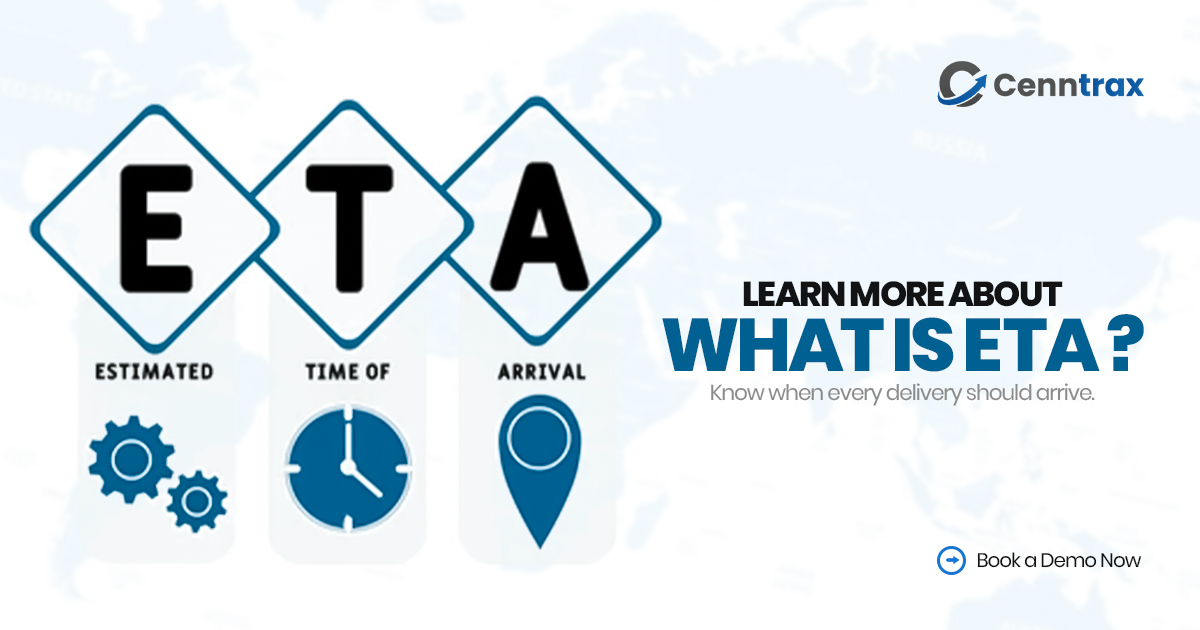
Ask any customer what matters most about a delivery, and the answer is rarely "how fast can you go." It's "when will it get here." That's the entire promise behind ETA — Estimated Time of Arrival — and it's one of the most important numbers in transportation, even though it's often the least understood.
Let's break down what ETA really means, why it's so easy to get wrong, and how Cenntrax makes it something you can actually rely on.
What ETA Actually Means
ETA is a prediction — the estimated moment a vehicle, shipment, or driver will arrive at its destination. Simple in concept, but the accuracy of that number depends on a lot of moving parts: current location, traffic conditions, route changes, stop delays, driver behavior, even weather.
A good ETA isn't just a static calculation made at the start of a trip. It's a number that should update continuously as conditions change — because the trip itself is constantly changing.
Why ETA Is Harder to Get Right Than It Looks
Most transportation systems calculate ETA once, at dispatch, and rarely revisit it. That means the ETA a customer sees at 9 a.m. might still be showing at 2 p.m. — even if the driver hit traffic, made extra stops, or took a different route entirely.
The result is a gap between what your system says and what's actually happening on the road. That gap erodes trust — with customers, with internal teams planning around deliveries, and with drivers who get blamed for "being late" against a number that was never accurate to begin with.
How Cenntrax Gets ETA Right
Cenntrax treats ETA as a living number, not a one-time guess. By pulling in real-time location data, live traffic conditions, and route progress, Cenntrax continuously recalculates arrival times throughout the trip — not just at the start.
Here's what that means for your operations:
Real-time accuracy. ETAs update as conditions change, so what you see reflects what's actually happening on the road right now.
Fewer surprises. Dispatchers and customers get an early heads-up when a delay is likely, instead of finding out only when the delivery doesn't show up on time.
Better planning across the board. Accurate ETAs help downstream teams — warehouse staff, customer service, other drivers — plan around realistic timing instead of outdated estimates.
Stronger customer trust. When your ETA is reliable, customers stop needing to call and ask "where is it?" The number speaks for itself.
Smarter dispatch decisions. Accurate, live ETA data feeds directly into how Cenntrax assigns and adjusts jobs, keeping the whole system responsive rather than reactive.
Why This Matters More Than You'd Think
ETA isn't just a courtesy number for customers — it's a signal your entire operation runs on. Late ETAs cascade into missed appointments, wasted warehouse labor, and frustrated teams trying to plan around numbers they can't trust.
Get ETA right, and everything downstream gets easier.
The Bottom Line
An ETA is only useful if it's accurate — and it's only accurate if it keeps up with reality. Cenntrax keeps every arrival estimate live, current, and dependable, so you always know when every delivery should arrive — not just when it was supposed to.
Know before they ask. That's ETA, done right, with Cenntrax.