Imagine running a business where you don't know what inventory you have, where your shipments are, whether your operations are on schedule, or what your customers are experiencing. Imagine trying to make decisions based on incomplete information, resolve problems you can't see, and serve customers you can't track.
This isn't a hypothetical scenario for many logistics companies. It's daily reality.
The lack of visibility in logistics operations is a silent killer. It erodes efficiency, damages customer relationships, increases costs, and ultimately destroys profitability. Yet many companies still operate with visibility gaps so severe they might as well be flying blind.
Without tracking and visibility, you don't have control. You have chaos.
Cenntrax and modern visibility platforms are solving this problem by providing comprehensive tracking and visibility across the entire supply chain. But first, let's understand exactly what lack of visibility costs you.
THE VISIBILITY CRISIS IN MODERN LOGISTICS
Most logistics operations suffer from fragmented, incomplete visibility. Here's what this looks like in practice:
Warehouse staff don't know what items are actually in stock. The inventory system says an item is available, but it's physically missing. Pickers waste time searching. Orders get delayed. Customers get disappointed.
Dispatch managers don't know where vehicles are or when they'll complete deliveries. Drivers operate independently. Dispatch reacts to problems rather than preventing them. Customer delivery windows slip.
Customers don't know where their shipments are. They call asking for updates. Support staff don't have current information, so they guess or put customers on hold. Customer frustration increases.
Operations leaders don't understand performance across the network. Are warehouses operating efficiently? Are carriers delivering on time? Where are the biggest cost opportunities? They can't answer these questions because they don't have comprehensive data.
Finance teams can't explain profitability by customer or lane. They see aggregate numbers but can't drill down to understand performance drivers. Cost control becomes guess-and-check.
This visibility crisis is widespread. A survey of 3PL companies found that 67 percent struggle with incomplete supply chain visibility. For many, the gaps are severe enough to limit operational control.
WHAT LACK OF VISIBILITY ACTUALLY COSTS
The cost of visibility gaps extends far beyond obvious inefficiencies:
Lost Operational Control
Without visibility, you can't control operations—you can only react to them. A shipment goes missing? You discover it when the customer calls. A warehouse bottleneck develops? You see it when deliveries start failing. A carrier consistently underperforms? You notice it after losing customers.
Reactive management is expensive. Problems cascade. Delays compound. Customer dissatisfaction grows. By the time you know there's a problem, damage is already done.
True operational control requires visibility. You see problems emerging and intervene before they impact performance. You make proactive decisions based on data rather than reactive decisions based on crisis management.
Missed Optimization Opportunities
Optimization requires data. Which routes are most efficient? Which warehouses operate best? Which carriers deliver reliably? Which customers are most profitable? Without visibility into these metrics, you can't optimize.
The result is operations that function but aren't optimized. You're leaving 15-25 percent on the table in potential efficiency gains. Every day you operate without visibility is profit you'll never recover.
Customer Satisfaction Erosion
Customers expect visibility into their shipments. They want to know where orders are, when they'll arrive, and what's happening. When you can't provide this information, they get frustrated.
This frustration is compounded by lack of accurate information. A customer asks for a delivery update and you guess. Your guess is wrong. The customer loses trust. They become more frustrated.
Repeated visibility failures erode the customer relationship. Customers decide you're unreliable and shop elsewhere. The cost? Lost revenue, churn, and negative word-of-mouth.
Increased Operational Costs
Lack of visibility leads to inefficient operations. Without route optimization data, drivers take suboptimal routes and waste fuel. Without warehouse productivity data, inefficiencies persist. Without carrier performance data, you keep using underperforming carriers.
These inefficiencies accumulate. A 10 percent route inefficiency across thousands of shipments becomes hundreds of thousands in wasted transportation costs. Warehouse inefficiencies compound daily. Carrier problems multiply across months.
Risk and Compliance Exposure
Lack of visibility creates compliance risk. Regulatory requirements increasingly demand supply chain transparency. If you can't track compliance, you can't prove compliance. Violations go unnoticed until audits or incidents reveal them.
Risk exposure increases without visibility. You don't know which shipments are high-value or high-risk. You don't know if items are stored properly. You don't know if regulations are being followed. Risk accumulates silently.
Cash Flow Problems
Without visibility, cash flow management becomes difficult. You don't know when shipments will be completed and billed. You can't forecast revenue accurately. Cash flow becomes unpredictable.
Visibility into shipment status enables better cash flow forecasting. You know which orders are about to complete. You know when invoices will be issued. You can forecast cash flow accurately and manage working capital efficiently.
Decision-Making Paralysis
Leaders making decisions without data are flying blind. Should you add capacity? Hire more staff? Expand to new markets? Without data, these are educated guesses at best.
Lack of visibility creates information vacuums that leaders try to fill with assumptions. These assumptions are often wrong. Decisions based on wrong assumptions lead to poor outcomes. Resources get wasted. Opportunities get missed.
Competitive Disadvantage
In competitive markets, visibility is increasingly a competitive requirement. Competitors who can track, optimize, and control operations better than you will outperform you. They'll deliver better service, lower costs, and higher profitability.
Lack of visibility doesn't just hurt internally—it hurts competitively. You lose business to competitors with better visibility.
HOW VISIBILITY GAPS MANIFEST IN REAL OPERATIONS
Let's walk through a real scenario that plays out daily in logistics companies without adequate visibility:
Monday morning: A warehouse completes an urgent shipment. But dispatch doesn't know it's ready because there's no integration between warehouse systems and dispatch systems. The shipment sits in staging for hours.
Late morning: A customer calls asking where their shipment is. Support staff check the system, which says "in warehouse." But they don't know the exact status. They tell the customer "it should ship today." The customer isn't satisfied because they need it delivered by end of day.
Afternoon: Dispatch finally learns the shipment is ready. But it's too late to get it on a truck that day. The shipment gets added to the next morning's shipments.
Tuesday morning: The shipment finally loads onto a truck. But dispatch doesn't know what route the truck is taking. The route wasn't optimized because there was no visibility into all the shipments on that truck.
Afternoon: The customer calls again. Support staff still don't have accurate tracking information. They can't tell the customer where the shipment is. The customer is now very unhappy.
Wednesday morning: The shipment finally gets delivered. One day late. The customer is upset about the delay. Support had to spend hours on calls with this customer. The driver spent extra time on an inefficient route. Profitability on this shipment is destroyed.
This scenario repeats thousands of times daily in companies without adequate visibility. Each instance costs money, damages customer relationships, and creates operational inefficiency.
With visibility enabled by platforms like Cenntrax, here's what happens instead:
Monday morning: Warehouse completes shipment. Warehouse system automatically notifies dispatch that shipment is ready. Dispatch sees it's an urgent shipment. Dispatch immediately arranges a truck to pick it up Monday afternoon.
Afternoon: Truck picks up shipment. Customer is automatically notified that shipment is in transit and will arrive Tuesday morning.
Tuesday morning: Truck is routed optimally with all other shipments. Route optimization system determines the most efficient delivery sequence. Dispatch and customer both see where the truck is in real-time.
Afternoon: Shipment gets delivered on time. Customer is satisfied. All parties see the delivery confirmation. No support calls were needed. The operation ran efficiently.
The difference isn't just one shipment—it's the multiplied impact across thousands of shipments daily.
THE CONTROL ILLUSION VS. ACTUAL CONTROL
Many logistics companies think they have control when they actually don't:
The Control Illusion: You have outdated reports generated daily or weekly. You know what happened last week, but not what's happening right now. You think you have control because you review reports.
Actual Control: You have real-time visibility into current operations. You see what's happening right now. You can intervene immediately when problems emerge. You can make decisions based on current data, not historical reports.
The difference is enormous. Real-time visibility enables true control. Historical reports create an illusion of control.
Cenntrax provides real-time visibility. You see operations as they happen. Decisions are made based on current information. Control is actual, not illusory.
VISIBILITY ACROSS THE SUPPLY CHAIN
Complete visibility requires tracking across multiple dimensions:
Order Visibility: From order placement to delivery, what's happening? Is the order being picked? Is it packed? Is it staged? Is it loaded? Is it in transit? When will it be delivered?
Without order visibility, you don't know where orders are in the fulfillment process. Delays go unnoticed until customers complain.
Warehouse Visibility: What's happening inside your facilities? Which items are in stock? Where are they physically located? What's being picked right now? What's ready to ship? What's waiting to be received?
Without warehouse visibility, inventory records don't match physical inventory. Pickers waste time searching for items. Bottlenecks develop unnoticed.
Transportation Visibility: Where are your vehicles? What are they carrying? Are they on schedule? Are they following optimal routes? Where are the drivers?
Without transportation visibility, you don't know if deliveries will be on time until the truck arrives at the customer. Route optimization isn't possible. Driver accountability is difficult.
Carrier Visibility: Which carriers are handling which shipments? What's their performance? Are they delivering on time? Are there issues?
Without carrier visibility, you keep using underperforming carriers. You can't make data-driven carrier selection decisions.
Customer Visibility: What's the customer experiencing? Can they see where their shipment is? Are delivery windows accurate? Is the customer satisfied?
Without customer visibility, you react to complaints rather than preventing problems. Customer satisfaction data comes from angry calls, not proactive feedback.
Financial Visibility: What's profitable? Which customers generate margin? Which lanes are cost-effective? Which operations are efficient?
Without financial visibility, you can't make strategic decisions about which business to pursue and which to avoid.
Cenntrax provides visibility across all these dimensions. You see operations holistically rather than through disconnected fragments.
THE RIPPLE EFFECTS OF POOR VISIBILITY
Lack of visibility doesn't just create direct problems—it creates ripple effects:
Warehouse inefficiency creates transportation problems. If warehouse operations are slow, shipments miss their transport windows. Trucks leave without full loads. Efficiency decreases.
Transportation problems create customer problems. If transportation is unreliable, deliveries are late. Customers get unhappy.
Customer problems create support problems. Unhappy customers call with complaints. Support staff spend hours on crisis management rather than proactive service.
Operational problems create cost problems. All these inefficiencies compound into higher costs. Margins get squeezed.
Cost problems create financial problems. Profits decrease. The company struggles.
At the root of all these ripple effects is lack of visibility. If you solve visibility, you begin solving all the downstream problems.
WHY LEGACY SYSTEMS CREATE VISIBILITY GAPS
Most visibility gaps exist because of fragmented legacy systems:
Systems don't integrate. The warehouse system doesn't talk to the transportation system. The transportation system doesn't talk to the customer portal. Each system operates independently with its own data.
Data doesn't flow in real-time. Information sits in queues waiting to be synced between systems. By the time data reaches the right people, it's already outdated.
Systems have different data formats. One system tracks shipments by package. Another by pallet. Another by truck. Converting between formats is manual and error-prone.
Mobile access is limited. Staff can only see data if they're at a workstation. Warehouse staff can't see their phones. Drivers can't access dispatch information.
Reporting is manual and slow. Getting a report requires custom queries. Running reports takes time. By the time the report is available, circumstances have changed.
Integration points are expensive and brittle. Adding a new system requires expensive custom integration. Integrations break frequently. Maintaining integrations requires ongoing IT effort.
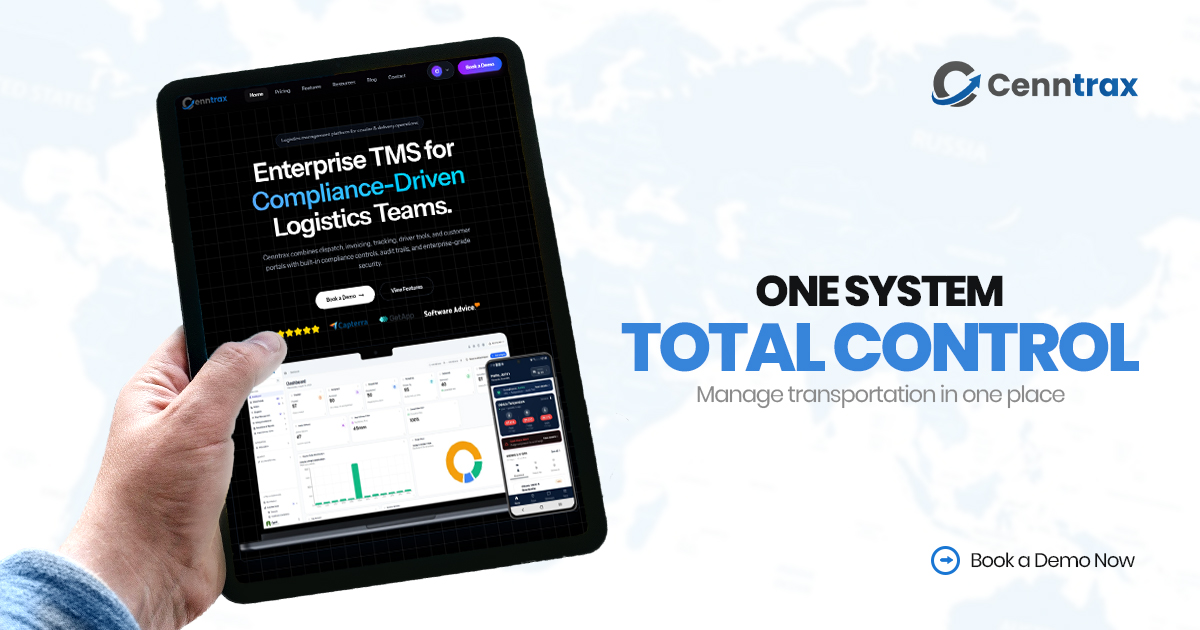
Modern platforms like Cenntrax solve these problems through unified architecture. One integrated platform. Real-time data flow. Consistent data formats. Mobile access everywhere. Automated reporting. Easy integration.
THE COST OF VISIBILITY TRANSFORMATION
Implementing visibility requires investment:
Technology platform costs. Integration costs. Training costs. Process redesign costs. Change management costs.
But the return on investment is compelling:
Operational efficiency gains typically recover costs within 12-18 months. After that, efficiency improvements flow directly to profitability.
Customer satisfaction improvements drive retention and revenue growth. Retained customers are much more profitable than new customers.
Decision-making improvements enable strategic optimization. You pursue profitable business and avoid unprofitable business.
Competitive positioning improvements enable market share gains. Better visibility creates competitive advantage.
For most logistics companies, the ROI justifies investment quickly. The real question isn't whether to invest in visibility, but how quickly you can implement it.
HOW CENNTRAX SOLVES THE VISIBILITY PROBLEM
Cenntrax provides comprehensive end-to-end visibility:
Integrated Platform: All functions—warehouse, transportation, billing, customer communication—operate on one integrated platform. Data flows seamlessly. Visibility is comprehensive.
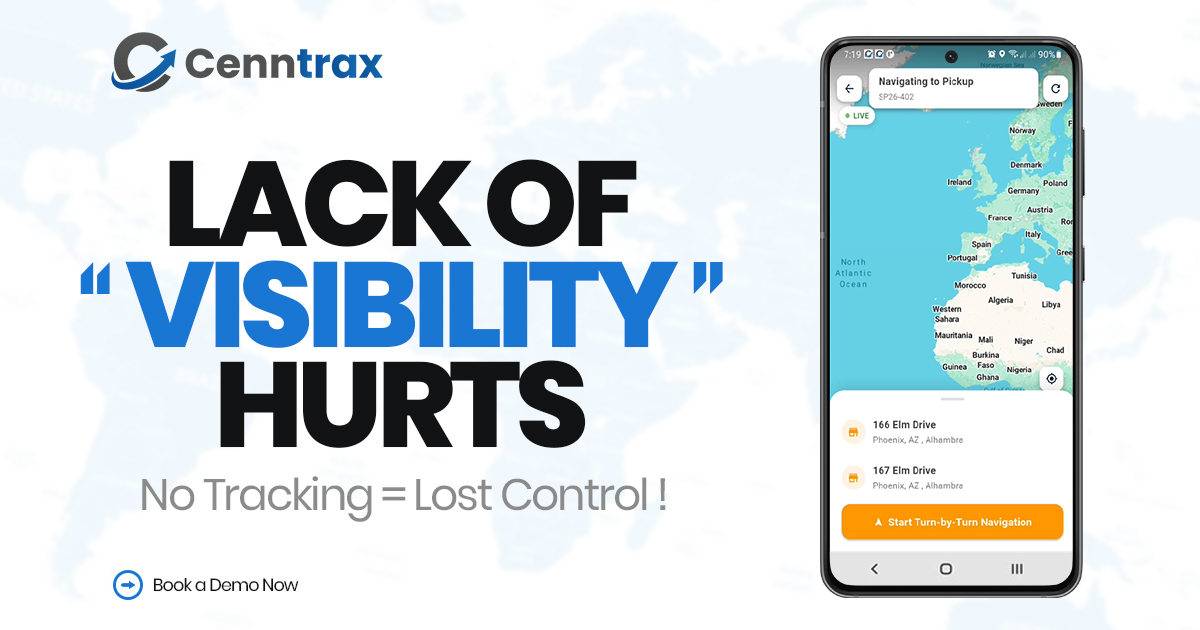
Real-Time Tracking: See what's happening right now, not what happened yesterday. Orders, shipments, vehicles, warehouse operations—all tracked in real-time.
Mobile Access: Teams access visibility from anywhere. Warehouse staff see inventory on their phones. Dispatch sees vehicles on their phones. Customers see tracking on their phones.
Automated Alerts: Problems trigger automatic alerts. Delayed shipments alert dispatch. Failed deliveries alert customer service. Inventory discrepancies alert warehouse management.
Comprehensive Dashboards: Leaders see operations holistically. Real-time KPIs show performance. Trends show trajectory. Alerts highlight problems.
Customer Portals: Customers see their shipments in real-time. Delivery windows are accurate. Visibility reduces support calls and increases satisfaction.
Integration with Partners: Integration with carrier systems, customer systems, and other partners extends visibility beyond your operations.
Predictive Visibility: Beyond seeing what's happening now, predict what will happen. Identify at-risk shipments before they fail.
TAKING ACTION: BUILDING A VISIBILITY CULTURE
Companies looking to transform visibility should:
Assess Current State: Understand your visibility gaps. Where do you lack real-time information? Where do systems not integrate? Where do you make decisions without data?
Prioritize Visibility: Identify which visibility gaps hurt most. Focus on those first. Early wins build momentum for further transformation.
Implement Technology: A platform like Cenntrax provides the foundation for visibility. Technology implementation should be prioritized.
Redesign Processes: Visibility enables new processes. Optimize workflows around real-time data availability. Automate decisions based on data.
Train Teams: Teams must understand how to use visibility data. Training ensures adoption and value realization.
Measure Impact: Track how visibility improves operations. Measure efficiency gains, customer satisfaction improvements, and profitability increases.
Expand Systematically: Once you've established visibility in core operations, expand to other areas. Build a company-wide visibility culture.
THE COMPETITIVE REALITY
In modern logistics, visibility is increasingly table stakes. Customers expect it. Competitors provide it. Regulators increasingly require it.
Companies without adequate visibility are at serious competitive disadvantage:
Competitors with visibility operate more efficiently and undercut you on price.
Competitors with visibility provide better customer experience and win business.
Competitors with visibility make better strategic decisions and capture market share.
The companies that will dominate logistics in coming years are those that have built comprehensive visibility infrastructure. Those without visibility will struggle to compete.
THE BOTTOM LINE
No tracking equals lost control. This isn't just an operational problem—it's a business problem.
Companies with poor visibility:
Operate inefficiently
Disappoint customers
Miss optimization opportunities
Make poor decisions
Struggle competitively
Companies with comprehensive visibility:
Operate efficiently
Satisfy customers
Optimize continuously
Make better decisions
Compete effectively
The choice is clear. Visibility isn't optional. It's essential.
Cenntrax enables the comprehensive visibility that separates logistics leaders from followers. Real-time tracking. Integrated systems. Mobile access. Automated alerts. Comprehensive dashboards.
With Cenntrax, you don't just have visibility—you have control.
MOVING FROM DARKNESS TO LIGHT
Operating without visibility is like flying an airplane in the dark without instruments. You might get lucky, but eventually you'll crash.
Visibility is the instrument panel. It tells you what's happening. It enables decisions. It provides control.
Companies that implement Cenntrax transform from operating in darkness to operating in light. They see what's happening. They control operations. They make better decisions. They outcompete rivals.
The question isn't whether you need visibility. You do. The question is how quickly you can implement it.
Ready to gain control of your operations? Discover how Cenntrax provides the end-to-end visibility that enables true operational control. No tracking equals lost control. Cenntrax equals regained control.