The delivery industry has undergone a dramatic transformation over the past decade. What once took weeks now needs to happen in days. What took days now needs to happen in hours. And in urban markets, customers increasingly expect same-day or next-day delivery. Meeting these expectations requires more than just hard work and dedication—it requires smart technology. Cenntrax understands this reality and has built solutions that help logistics companies stay ahead of the curve.
The Problem with Manual Dispatch
For decades, delivery dispatch was a manual process. Planners would review incoming orders, examine delivery routes on maps, assign drivers to stops, and communicate instructions via phone, radio, or email. The process was slow, error-prone, and often resulted in inefficient routes that wasted fuel, time, and resources.
Consider a typical day at a mid-sized logistics operation. Orders come in throughout the morning. A dispatcher receives the list, studies a map, and manually calculates routes based on geography, traffic patterns they remember, and driver experience they know firsthand. Communication happens through various channels—some drivers use radios, others check email, a few rely on phone calls. If a new order comes in after routes are already assigned, the dispatcher must recalculate everything, potentially creating cascading delays throughout the day.
Manual dispatch also created bottlenecks. During peak hours or seasonal surges, a small team of dispatchers couldn't handle the volume of orders fast enough. Customers waited longer for confirmations, and deliveries were delayed simply because the coordination system couldn't keep pace with demand. A dispatcher managing 50 orders per day might be overwhelmed by 200 orders during the holiday season, but the company still expects the same fast service. Something has to give, and usually it's delivery speed and customer satisfaction.
Beyond speed, manual dispatch is also prone to errors. A dispatcher might misread an address, overlook a vehicle constraint, or forget to factor in a driver's shift end time. These mistakes result in failed deliveries, customer complaints, and wasted mileage. Over the course of a year, these inefficiencies add up to thousands of wasted dollars and countless frustrated customers.
Enter Automated Dispatch
Automated dispatch systems leverage artificial intelligence, real-time data, and sophisticated algorithms to handle what humans do manually—but faster and smarter. Cenntrax's automated dispatch platform instantly analyzes incoming orders, current traffic conditions, driver locations, vehicle capacity, and delivery windows to generate optimal routes and assignments in seconds.
This represents a fundamental shift in how logistics companies operate. Instead of a dispatcher manually planning routes, the system does it automatically. Instead of communicating instructions through multiple channels, drivers receive updates directly to their mobile devices. Instead of hoping routes are efficient, companies can be certain that Cenntrax has optimized every aspect of the delivery schedule.
The technology behind Cenntrax is sophisticated. The system considers hundreds of variables simultaneously—vehicle capacity, driver availability, traffic patterns, delivery time windows, vehicle type requirements, customer preferences, and more. It evaluates thousands of possible route combinations and selects the optimal solution in real time. What would take a human dispatcher hours, Cenntrax completes in seconds.
How Automated Dispatch Boosts Delivery Speed
Instant Route Optimization
When an order comes in, Cenntrax's automated system doesn't wait for human input. It immediately calculates the most efficient route considering current traffic, turn restrictions, vehicle type, and driver availability. What would take a dispatcher 10-15 minutes now happens in milliseconds. This means drivers hit the road faster with optimized routes, reducing idle time and travel distance.
The speed advantage here is twofold. First, there's no delay in planning. Second, the routes themselves are better. A human dispatcher might create a logical route, but Cenntrax often finds better combinations that save minutes per delivery. When you multiply this across hundreds of deliveries per day, the time savings become substantial. A company might deliver 20-30% more orders in the same time window simply because each route is optimized for maximum efficiency.
Real-Time Adaptability
Traffic accidents, weather events, and unexpected road closures happen constantly. Manual dispatch systems can't adapt quickly enough. A dispatcher might not even know about a traffic jam until a driver calls in, at which point valuable time has already been lost.
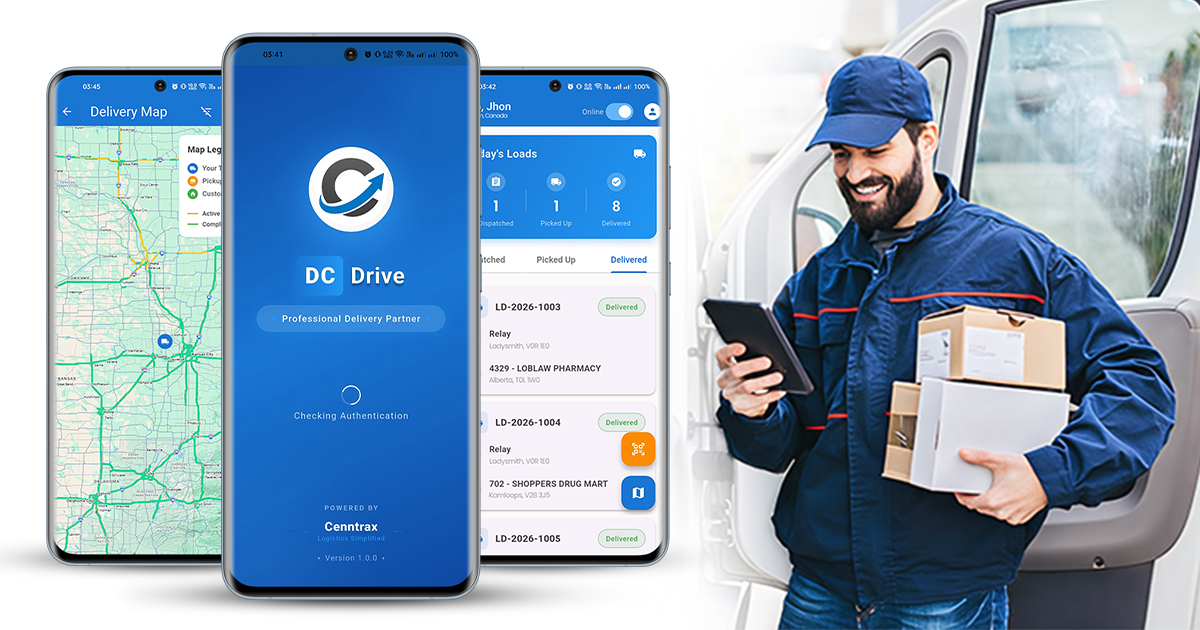
Cenntrax automatically reroutes drivers in real-time when conditions change, ensuring deliveries stay on schedule even when the unexpected occurs. The system integrates with live traffic data, weather alerts, and real-time vehicle tracking. If a major intersection gets blocked, Cenntrax immediately recalculates all affected routes and pushes updated instructions to relevant drivers. Drivers receive updated instructions instantly on their mobile devices and can begin following the new route without delay.
This capability is especially valuable in dense urban areas where traffic patterns change rapidly. In a city like New York or London, a single accident can affect dozens of delivery routes. While manual dispatchers scramble to figure out what went wrong, Cenntrax has already solved the problem and rerouted all affected deliveries.
Better Resource Utilization
Automated dispatch eliminates the inefficiencies of human scheduling. When a dispatcher manually assigns orders, they might not perfectly fill a vehicle's capacity, or they might miss an opportunity to combine two nearby deliveries. Cenntrax's system maximizes vehicle capacity by intelligently combining orders and assigning them to the right drivers and vehicles.
This results in fewer total trips needed to complete all deliveries. Instead of five vehicles making inefficient routes, maybe four vehicles can handle the same workload. This reduces fuel consumption, lowers labor costs, and gets more deliveries completed per day, directly improving speed and reducing operational costs. Over a month, this efficiency might translate to dozens of additional deliveries without hiring new drivers or purchasing new vehicles.
Reduced Idle and Wait Time
Manual systems often result in drivers waiting for dispatch instructions or traveling inefficient routes. A driver might complete an early delivery and then wait for the dispatcher to communicate the next stop. Or a driver might take a route they think is optimal, not realizing there were better options. Cenntrax ensures drivers are always optimally routed, minimizing downtime.
Customers also benefit from faster order confirmation and more predictable delivery windows. When Cenntrax optimizes a route, it can accurately predict arrival times. Customers receive reliable windows like "between 2 PM and 3 PM" instead of vague estimates like "sometime in the afternoon." This reliability improves customer satisfaction and reduces the number of customers who need to stay home waiting for a delivery.
Scalability During Peak Demand
Human dispatchers have limits. During Black Friday, the holiday season, or other peak periods, they become a bottleneck. A dispatcher who can handle 100 orders per day might struggle with 300 orders. Adding temporary staff helps, but new dispatchers need training and don't have the experience of regular team members.
Automated dispatch systems like Cenntrax scale effortlessly. Whether you're processing 100 orders or 10,000, the system maintains the same speed and efficiency. The technology doesn't get tired or overwhelmed. It processes orders at the same rate regardless of volume. This means companies can handle seasonal surges without worrying about whether their dispatch operations will collapse under the pressure.
This scalability is a huge competitive advantage. A company using Cenntrax can confidently advertise same-day delivery during peak seasons because they know their dispatch system won't be the limiting factor. Manual dispatch operations often have to reduce service levels during busy periods—not so with Cenntrax.
Improved Driver Experience
An often-overlooked benefit of automated dispatch is improved driver experience. Drivers using Cenntrax spend less time on administrative tasks and more time making deliveries. They don't need to wait for dispatch instructions or struggle with poorly planned routes. They receive clear, optimized directions to their next stop and can focus on delivering excellent customer service.
Drivers also benefit from predictability. With Cenntrax, a driver knows their full schedule at the start of the day. They can plan their breaks, manage their time more effectively, and have better work-life balance. Manual dispatch often requires constant radio communications and route changes, creating stress and unpredictability.
Better driver experience leads to lower turnover, which means more experienced drivers and better customer interactions. It's a virtuous cycle where technology improves operations in multiple ways simultaneously.
Data-Driven Insights
Beyond real-time optimization, Cenntrax provides valuable analytics and insights. Companies can analyze which routes are most efficient, which time windows generate the most deliveries, which drivers perform best, and where their network has bottlenecks. This data informs strategic decisions about expansion, staffing, and service area priorities.
A logistics company might discover through Cenntrax analytics that their suburban routes are underutilized while urban routes are constrained. This insight could lead to strategic decisions about where to expand next. Or they might discover that afternoon delivery windows are more efficient than morning windows, allowing them to adjust their customer-facing service offerings accordingly.
The Business Impact
Companies using Cenntrax's automated dispatch report significant improvements:
Delivery times reduce by an average of 15-25%
Same-day delivery becomes viable for more orders in more areas
Fuel and labor costs decrease due to optimized routing and better vehicle utilization
Customer satisfaction increases with faster, more reliable deliveries
Operational scalability allows for business growth without proportional cost increases
Driver retention improves due to better work conditions and predictability
Failed deliveries decrease because routes are more reliable and time windows more accurate
Flexibility increases because the system can handle unexpected changes and surges
One company reported that after implementing Cenntrax, they reduced their average delivery time from 2.5 days to 1.8 days while simultaneously reducing fuel costs by 18%. Another company found they could handle 40% more daily deliveries without hiring additional drivers. These aren't theoretical improvements—they're real results from actual operations.
Competitive Advantage in a Speed-Driven Market
In today's competitive landscape, delivery speed is a key differentiator. Customers comparing online retailers often choose based on how fast they can receive their order. Amazon's two-day shipping set a new standard, and newer companies are pushing toward same-day delivery. Companies that can't meet these expectations lose customers to those who can.
Cenntrax's automated dispatch technology enables companies to compete on speed. A mid-sized logistics company using Cenntrax can offer delivery performance that rivals much larger competitors. The technology levels the playing field, allowing smart operators to compete effectively regardless of their size.
This is particularly important for companies in the e-commerce, food delivery, and same-day delivery spaces. These industries live or die based on delivery speed. Cenntrax enables companies in these spaces to meet customer expectations consistently.
Implementation and Integration
One concern companies have about new technology is implementation difficulty. Cenntrax is designed for easy integration. The system connects with existing fleet management software, telematics systems, and customer databases. Companies don't need to overhaul their entire operation—they integrate Cenntrax into their existing workflow.
Training is straightforward too. Drivers need to learn a new app, and dispatch teams need to adjust to a new workflow, but neither is complicated. Most companies report that their teams are fully productive on Cenntrax within a week or two.
The Future of Delivery
In today's competitive landscape, delivery speed is a key differentiator. Customers comparing online retailers often choose based on how fast they can receive their order. Cenntrax's automated dispatch technology doesn't just speed up deliveries—it fundamentally transforms how logistics companies operate, making them more agile, cost-effective, and customer-focused.
The future of delivery logistics belongs to companies that embrace automation. Manual dispatch will increasingly be seen as a competitive disadvantage, like running a modern business without email. Companies that continue relying on manual dispatch will struggle to compete with more technologically advanced competitors.
The future of delivery isn't just about faster trucks and shorter distances. It's about smarter systems that work around the clock to ensure every order gets to its destination as quickly and efficiently as possible. It's about data-driven decisions instead of gut feelings. It's about scalability that grows with your business. That's what automated dispatch delivers, and that's why Cenntrax is leading the charge.
Conclusion
Delivery speed matters more than ever. Customer expectations have shifted, competition has intensified, and the market increasingly favors companies that can deliver faster. Whether you're in e-commerce, food delivery, logistics, or any other delivery-based business, speed directly impacts your bottom line.
Cenntrax's automated dispatch platform offers a proven way to improve delivery speed while reducing costs and improving reliability. It's not about working harder—it's about working smarter. The technology does the heavy lifting of route optimization and dispatching, freeing your team to focus on growth and customer service.
For logistics companies ready to compete in the speed economy, Cenntrax offers the automation, intelligence, and reliability needed to lead the market. The future of delivery is here. The question is whether your company will lead it or fall behind.