A fleet is one of the largest and most expensive assets any logistics operation owns — and one of the easiest to under-optimize. Idle vehicles, inefficient routes, unplanned maintenance, and underused capacity quietly drain profitability every single day. The good news: fleet efficiency isn't about buying more vehicles or hiring more drivers. It's about using what you already have, smarter. That's the philosophy Cenntrax brings to fleet management.
The Hidden Cost of an Inefficient Fleet
Most fleet inefficiency doesn't show up as one big, obvious problem. It shows up as dozens of small ones:
A truck sits half-empty because loads weren't consolidated.
A driver takes a familiar route instead of the fastest one.
A vehicle breaks down mid-delivery because a warning sign was missed weeks earlier.
Vehicles sit idle in a yard while others are overbooked on the same day.
Individually, these look like minor inefficiencies. Added together across a fleet of dozens or hundreds of vehicles, they translate into real money — wasted fuel, missed delivery windows, unnecessary overtime, and higher maintenance bills.
Four Pillars of Fleet Optimization
1. Right-size every load. Efficient fleets don't just move vehicles — they move capacity. By analyzing shipment volume, weight, and destination patterns, fleets can consolidate loads, reduce the number of trips, and get more value out of every mile driven.
2. Route smarter, not just faster. Optimization isn't only about finding the shortest path — it's about finding the most efficient one, factoring in traffic, delivery windows, fuel cost, and driver hours. A slightly longer route that avoids congestion or tolls can often be the cheaper, faster choice overall.
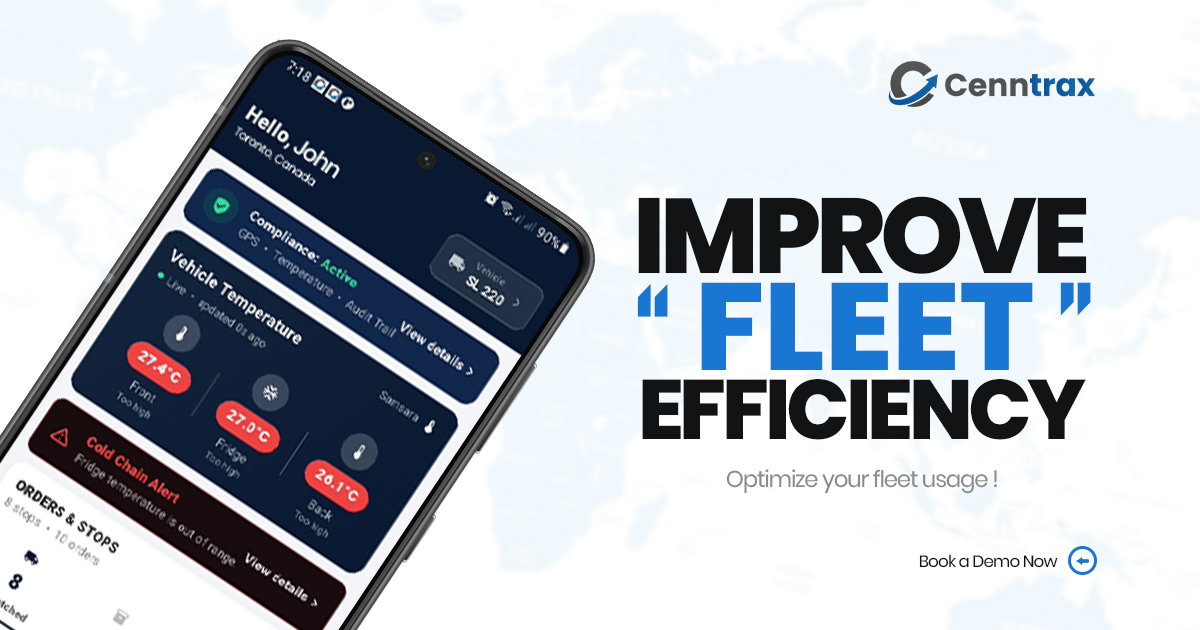
3. Predict maintenance before it becomes downtime. Unplanned breakdowns are one of the costliest disruptions a fleet can face — they stall deliveries, strand drivers, and often lead to expensive emergency repairs. Monitoring vehicle health data allows maintenance to be scheduled proactively, before a small issue turns into a major failure.
4. Balance utilization across the whole fleet. An efficient fleet isn't one where every vehicle is busy all the time — it's one where usage is balanced. Overworking some vehicles while others sit idle leads to uneven wear, higher costs, and lower overall output. Smart scheduling spreads demand evenly across available assets.
How Cenntrax Approaches Fleet Efficiency
At Cenntrax, we treat fleet optimization as an ongoing discipline, not a one-time fix. Our approach focuses on:
Real-time visibility into vehicle location, load status, and performance, so decisions can be made as conditions change — not after the fact.
Data-backed routing and scheduling, replacing static plans with dynamic ones that adjust to real-world conditions.
Predictive maintenance insights, helping fleets shift from reactive repairs to proactive upkeep.
Utilization analytics, giving fleet managers a clear picture of which vehicles are overused, underused, and everything in between.
The goal isn't just fewer breakdowns or shorter routes — it's a fleet that runs at its true potential, every day.
The Payoff of a Well-Optimized Fleet
When fleet usage is optimized, the benefits compound quickly:
Lower fuel and operating costs
Fewer unplanned repairs and less downtime
Higher on-time delivery rates
Longer vehicle lifespan
Better driver satisfaction, thanks to fewer last-minute changes and smoother schedules
None of this requires a bigger fleet — it requires a smarter one.
Final Thoughts
Fleet efficiency isn't a single upgrade — it's a mindset shift from reactive management to proactive optimization. Every vehicle, every route, and every load is an opportunity to do more with what you already have. Cenntrax is built to help fleets uncover exactly those opportunities, turning everyday operations into a leaner, more resilient, more efficient logistics engine.
Because the most efficient fleet isn't the biggest one — it's the best-managed one.