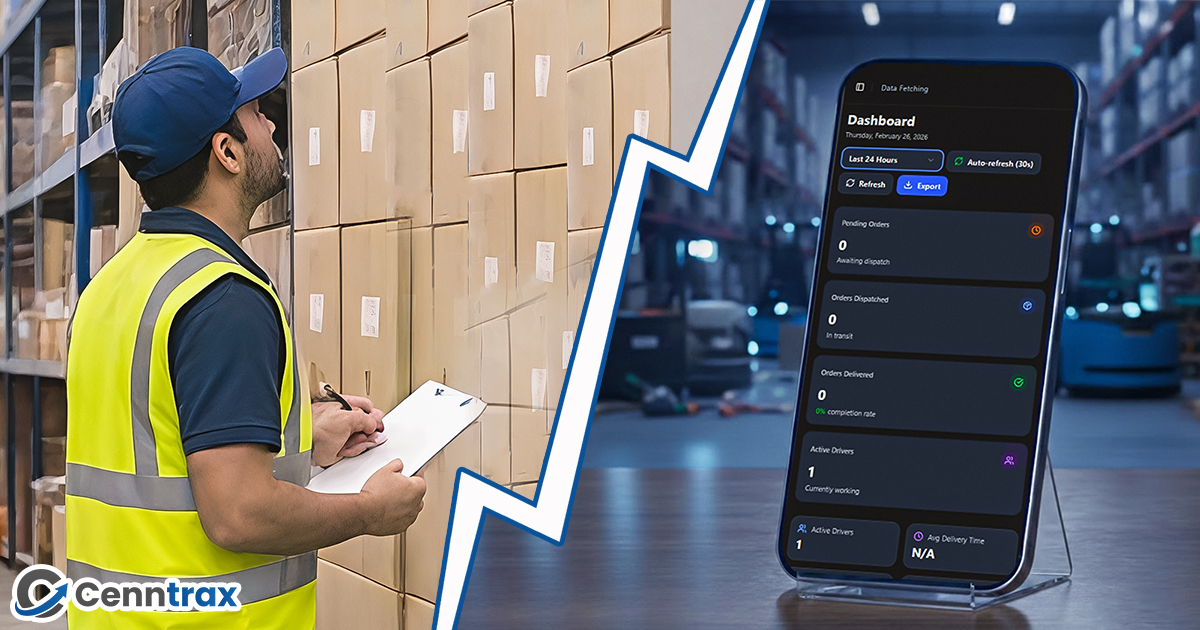
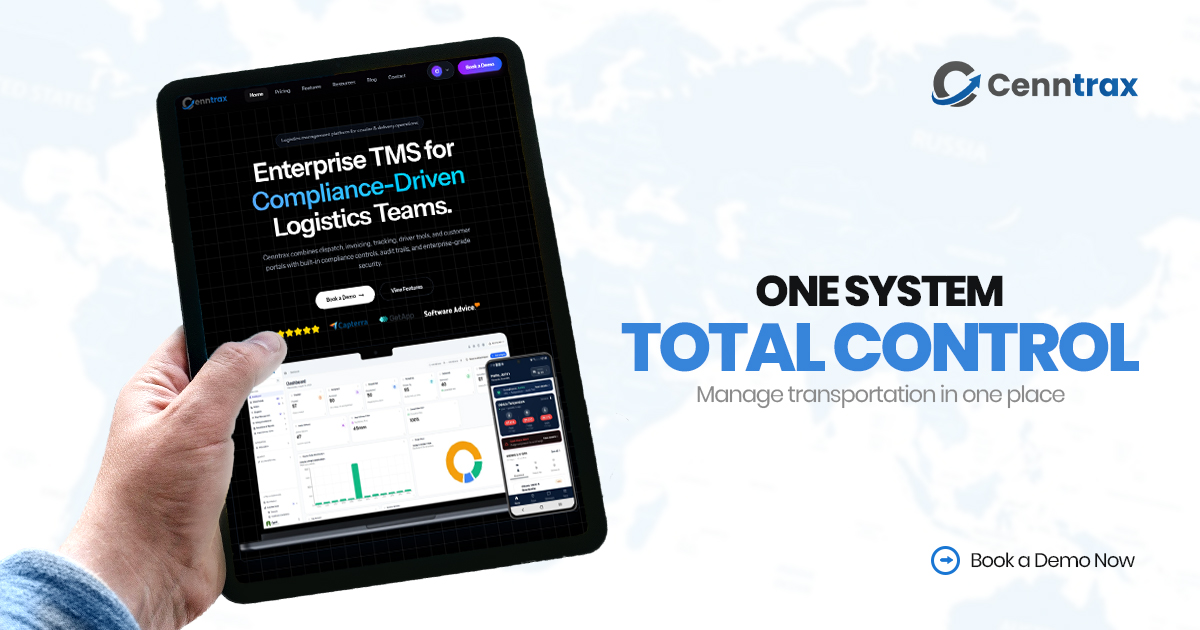
In today's fast-paced logistics environment, speed and accuracy aren't just competitive advantages—they're survival requirements. Yet countless logistics companies still rely on manual dispatch processes that were designed for a different era. Spreadsheets, phone calls, paper manifests, and gut-feel routing decisions can't keep pace with modern demands. At Cenntrax, we've helped logistics companies transform from manual chaos to automated precision, and we've seen firsthand how manual dispatch systematically destroys efficiency, profitability, and customer satisfaction. Here's why manual processes are holding your logistics operation back and what modern automation can do. The Hidden Costs of Manual Dispatch Manual dispatch seems cost-effective on the surface—no expensive software to purchase, no complex implementation, just people doing what they've always done. But this perception misses the enormous hidden costs that manual processes create. Time Waste at Scale Consider a typical morning at a logistics company using manual dispatch. Dispatchers arrive early to review yesterday's deliveries, check which drivers are available, review today's pickup and delivery requests, plan routes using maps or memory, and call or text drivers with assignments. This process takes 2-3 hours for a fleet of 20-30 vehicles. Those same dispatchers spend their days fielding calls from drivers asking for directions, customers inquiring about delivery status, sales teams requesting pickup times, and management wanting status updates. Between planning routes and answering questions, dispatchers have little time for optimization or problem-solving. At Cenntrax, we've calculated that manual dispatch typically consumes 15-25 hours per week per dispatcher on tasks that automated systems handle in minutes. For a logistics company with three dispatchers, that's 45-75 hours weekly—over one full-time employee's worth of time—spent on work that automation eliminates. Routing Inefficiency Manual route planning relies on dispatcher knowledge and intuition. Experienced dispatchers develop mental maps of their territory and general sense of efficient routes. But human brains can't optimize routes considering dozens of variables simultaneously— traffic patterns, time windows, vehicle capacity, driver hours, fuel costs, and priority levels. The result is suboptimal routing. Vehicles travel more miles than necessary, deliveries arrive outside preferred time windows, and fuel costs exceed what optimized routing would require. Studies show that manual routing typically results in 15-25% more miles driven compared to optimized routing. For a fleet driving 100,000 miles monthly, this inefficiency means 15,000-25,000 unnecessary miles. At current fuel prices, that's thousands of dollars monthly in excess fuel costs alone—before considering vehicle wear, driver hours, and environmental impact. Customer Service Failures When customers call asking "where's my delivery?" manual dispatch struggles to provide accurate answers. Dispatchers don't have real-time visibility into driver locations or progress. They rely on drivers calling in updates, checking last known locations, or making educated guesses. This lack of visibility creates customer service problems. Vague delivery windows frustrate customers expecting precision. Missed delivery windows damage customer relationships. Inability to provide accurate ETAs when asked makes your company seem disorganized. And lack of proactive communication when delays occur leaves customers feeling neglected. Modern customers expect real-time tracking and proactive updates—capabilities that manual dispatch can't deliver. The Compounding Effect of Manual Errors Manual processes are error-prone. Dispatchers are human—they make mistakes, especially when tired or rushed. Small errors compound into significant problems. Data Entry Errors Manual dispatch involves constant data entry—customer addresses, delivery requirements, special instructions, package counts. Every manual entry is an opportunity for error. A transposed address digit sends a driver to the wrong location. Misunderstood special instructions result in failed deliveries. Incorrect package counts lead to disputes. At Cenntrax, clients implementing automated dispatch systems typically discover that 3 5% of manual deliveries contained some form of data error. Most were caught and corrected, but the time spent identifying and fixing errors—not to mention the errors that weren't caught—created substantial inefficiency. Miscommunication Manual dispatch relies heavily on verbal communication—phone calls, text messages, and conversations. Miscommunication is inevitable. Drivers misunderstand addresses or instructions, dispatchers fail to communicate route changes clearly, special handling requirements get lost in translation, and priority levels aren't conveyed accurately. These communication failures result in drivers arriving at wrong locations, deliveries made incorrectly requiring returns or re-delivery, frustrated customers receiving poor service, and wasted time clarifying misunderstandings. Forgotten Tasks and Missed Commitments In the chaos of manual dispatch, things fall through cracks. A promised pickup gets forgotten, a delivery time commitment isn't tracked, a special customer request isn't communicated to the driver, or a vehicle maintenance need gets overlooked. These failures damage customer relationships and operational reliability in ways that compound over time. Lack of Real-Time Visibility Perhaps manual dispatch's biggest limitation is the lack of real-time visibility into operations. Dispatchers work with outdated information, making decisions based on where they think drivers are rather than where they actually are. Where Are My Drivers? Without GPS tracking and automated systems, dispatchers don't know driver locations in real-time. They rely on drivers calling in with updates, last known locations from hours ago, or assumptions based on planned routes. This blindness creates problems. Emergency pickups can't be assigned to the nearest available driver because you don't know who that is. Customers requesting delivery ETAs can't get accurate answers. Identifying which drivers are running behind schedule requires manual check-ins. And verifying actual routes traveled versus planned routes is impossible. What's Actually Happening? Manual dispatch operates on planned schedules rather than actual progress. You know what should be happening but not what is happening. This disconnect between plan and reality means problems aren't identified until they've already occurred, rather than being predicted and prevented. Automated systems from Cenntrax provide real-time visibility—you see exactly where every vehicle is, what they've completed, what's in progress, and what's upcoming. This visibility enables proactive management rather than reactive firefighting. Inability to Scale Manual processes don't scale efficiently. Adding vehicles and routes to manual dispatch operations requires proportionally adding dispatchers. This linear scaling is expensive and operationally complex. The Dispatcher Bottleneck Each dispatcher can effectively manage a limited number of vehicles—typically 15-25 depending on complexity. Beyond that, quality deteriorates and errors increase. Growing your fleet from 30 to 60 vehicles requires doubling dispatch staff, along with all associated costs—salaries, benefits, training, workspace, and supervision. Automated dispatch scales differently. The same system handles 50 vehicles as easily as 500. Adding capacity doesn't require proportionally adding dispatch staff. Growth becomes operationally feasible without massive dispatch department expansion. Geographic Expansion Complexity Manual dispatch becomes exponentially more complex when expanding into new territories. Dispatchers lack familiarity with new areas, route planning in unfamiliar territory takes longer and yields worse results, and managing operations across multiple regions becomes coordination nightmares. Automated systems don't care whether routes are in familiar or unfamiliar territory. The algorithms optimize based on data, not memory. Geographic expansion doesn't create the same operational complexity that manual processes face. The Automated Alternative Modern automated dispatch systems transform logistics operations. At Cenntrax, we've seen companies reduce operational costs by 20-30% while improving service quality through automation. Intelligent Route Optimization Automated routing algorithms consider hundreds of variables simultaneously—pickup and delivery locations and time windows, vehicle capacity and current load, driver hours and break requirements, traffic patterns and road conditions, fuel costs and vehicle efficiency, priority levels and service commitments, and customer preferences. The system generates optimal routes in minutes that would take hours to develop manually and still wouldn't achieve the same efficiency. Routes adapt in real-time as conditions change—new orders arrive, traffic delays occur, or delivery times adjust. Cenntrax clients typically see 15-25% reduction in miles driven, 20-30% improvement in deliveries per vehicle per day, and dramatic reduction in fuel costs and vehicle wear. Real-Time Tracking and Visibility Automated systems provide complete operational visibility. Track every vehicle in real-time on a map, see delivery progress and completion status, monitor driver hours and compliance, identify delays or issues as they develop, and predict arrival times accurately based on actual progress. This visibility transforms customer service. Instead of vague answers when customers call, you provide precise ETAs. Instead of reactive responses to problems, you address issues proactively. Instead of hoping operations proceed according to plan, you know exactly what's happening. Automated Customer Communication Modern dispatch systems communicate with customers automatically. Customers receive automated notifications when delivery is dispatched, when driver is approaching, and when delivery is completed. They can track deliveries in real-time through customer portals. They receive proactive alerts if delays occur. This automation reduces customer service call volume while improving satisfaction. Customers get the information they want without calling, and proactive communication demonstrates professionalism. Data-Driven Decision Making Automated systems capture comprehensive data on every aspect of operations—actual routes traveled versus planned, delivery times versus commitments, driver performance and efficiency, vehicle utilization and costs, and customer service levels. This data enables continuous improvement. You identify inefficiencies and address them, measure the impact of changes objectively, and benchmark performance against industry standards. Manual processes can't provide this level of analytical insight. You operate on assumptions rather than data. Real-World Transformation: A Cenntrax Client Story A regional logistics company came to Cenntrax managing 35 delivery vehicles through manual dispatch. Three dispatchers worked 10-12 hour days planning routes, communicating with drivers, and fielding customer calls. Fuel costs were high, customer complaints about missed windows were frequent, and scaling seemed impossible without hiring more dispatchers. Cenntrax implemented automated dispatch, route optimization, and real-time tracking. The transformation was dramatic: Miles Driven: Decreased 22% through optimized routing, saving over $8,000 monthly in fuel costs. Deliveries per Vehicle: Increased 28% through efficient route planning, allowing the same fleet to handle more volume. Dispatcher Workload: Reduced from three full-time dispatchers to two, with remaining dispatchers handling exception management and customer service rather than route planning. Customer Complaints: Dropped 67% due to accurate ETAs and proactive communication. Growth Capacity: The company grew from 35 to 55 vehicles over two years with the same two dispatchers, growth that would have been impossible with manual processes. The ROI was clear within six months. The system paid for itself through fuel savings and efficiency gains, with ongoing benefits continuing to compound. Overcoming Automation Hesitation Despite clear benefits, some companies hesitate to automate dispatch. Common concerns include: "Our operation is too complex for automation." Modern systems handle complex scenarios—multiple vehicle types, specialized equipment requirements, driver skill certifications, and customer-specific requirements. What seems too complex for automation usually reflects limitations of older systems, not current technology. "We'll lose the personal touch." Automation doesn't eliminate human judgment—it amplifies it. Dispatchers shift from routine tasks to exception handling and customer relationships. The personal touch improves because people have time for it. "Implementation will be disruptive." Phased implementations minimize disruption. At Cenntrax, we typically run automated and manual processes in parallel initially, transitioning gradually. Most companies fully transition within 30-60 days with minimal operational disruption. "The cost is prohibitive." When comparing automation costs to the total cost of manual processes—dispatcher salaries, excess fuel, vehicle wear, missed opportunities, and customer service failures—automation typically has clear positive ROI within 6-12 months. The Cenntrax Approach At Cenntrax, we specialize in logistics automation that delivers measurable results. Our approach includes comprehensive assessment of current operations and pain points, customized implementation tailored to specific requirements, integration with existing systems and workflows, training ensuring teams use systems effectively, and ongoing support and optimization. We don't just sell software—we partner with logistics companies to transform operations and deliver sustained improvements. The Competitive Reality Logistics is becoming increasingly competitive. Customers expect Amazon-level service— real-time tracking, accurate ETAs, and proactive communication. Margins are tight, and efficiency determines profitability. Companies operating on manual processes can't compete effectively against those leveraging automation. The question isn't whether to automate but when and how. Delaying automation while competitors move forward creates gaps that become harder to close over time. Early automation adopters gain efficiency advantages, customer service superiority, and data insights that late adopters struggle to match. Conclusion Manual dispatch is killing logistics efficiency through time waste, routing inefficiency, errors, lack of visibility, and inability to scale. These aren't minor inconveniences—they're systematic drains on profitability and customer satisfaction. Automated dispatch systems eliminate these problems while creating new capabilities— optimized routing, real-time visibility, automated customer communication, and data driven decision-making. The technology exists, it's proven, and it delivers measurable ROI. The logistics companies thriving in coming years won't be those with the biggest fleets or longest history. They'll be those that leverage technology to operate more efficiently, serve customers better, and scale intelligently. Don't let manual processes hold your logistics operation back. The cost of automation pales compared to the cost of continuing with inefficient manual dispatch.
Back to Blog
Manual vs Automated Logistics Why Manual Dispatch is Killing Your Logistics Efficiency
Centrax TeamMay 13, 202611 min read113 views