What is a Transportation Management System (TMS)?
A Transportation Management System (TMS) is a software platform designed to help businesses plan, execute, and optimize the movement of goods.
It acts as the control center for logistics operations, handling everything from dispatching drivers to tracking deliveries and managing billing.
Instead of relying on spreadsheets, phone calls, and disconnected tools, a TMS centralizes all operations into one system.
Key Features of a TMS
A modern TMS typically includes the following core features:
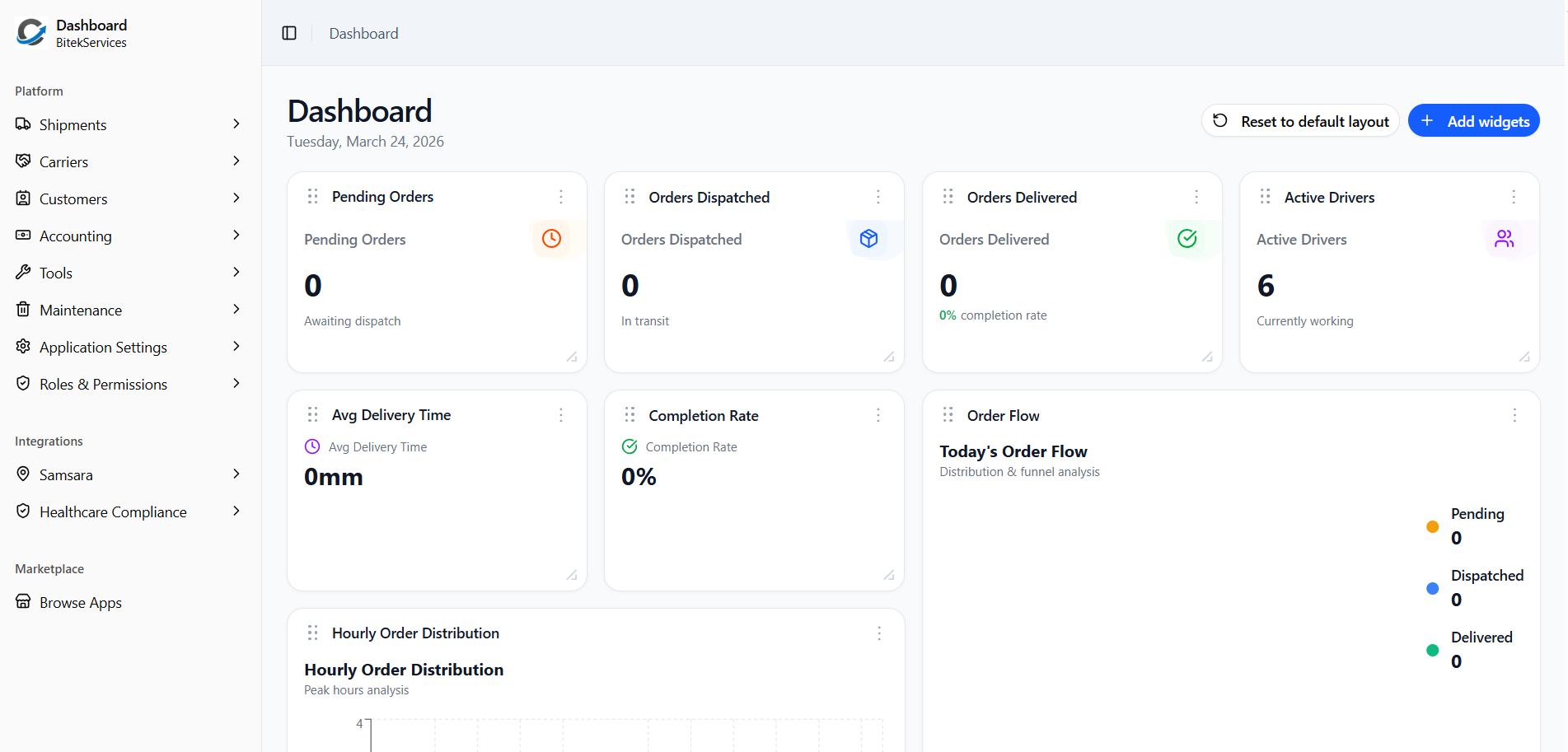
Load creation and dispatch management: Create, assign, and manage shipments in real time using a centralized dispatch board.
Real-time tracking and visibility: Track drivers, vehicles, and deliveries with live GPS updates and status changes.
Driver and fleet management: Manage driver availability, documentation, and fleet performance in one place.
Customer portals: Allow customers to place orders, track deliveries, and access documents without manual communication.
Automated invoicing and billing: Generate invoices, process payments, and manage financials directly within the platform.
Reporting and analytics: Gain insights into performance, profitability, and operational efficiency.
Integrations: Connect with telematics providers, accounting software, and external APIs to streamline workflows.
Benefits of Using a TMS
Implementing a TMS has a direct impact on efficiency and profitability:
Reduced operational costs: Automation reduces manual work and eliminates costly errors.
Increased efficiency: Dispatchers can manage more loads in less time with better visibility.
Improved customer experience: Real-time tracking and faster communication lead to higher customer satisfaction.
Scalability: Grow your business without needing to proportionally increase your team.
Better decision making: Data-driven insights help optimize routes, pricing, and resource allocation.
Problems with Traditional TMS Software
Many legacy TMS platforms were built years ago and have not evolved with modern logistics demands.
Common issues include:
Shared infrastructure leading to slow performance
Per-user pricing that becomes expensive at scale
Limited customization
Weak security practices
Poor integrations with modern tools
What Makes a Modern TMS Different
Modern TMS platforms are built with scalability, performance, and security in mind.
Platforms like Cenntrax take a different approach:
Dedicated cloud infrastructure per client
Unlimited users with flat pricing
Built-in compliance and security controls
API-first architecture
Real-time data and automation
Who Needs a TMS?
A TMS is essential for:
Courier and last-mile delivery companies
Freight brokers and carriers
Third-party logistics providers (3PLs)
Healthcare and pharmaceutical logistics companies
Enterprise supply chain teams
How to Choose the Right TMS
When selecting a TMS, consider:
1. Scalability
2. Pricing model
3. Security and compliance
4. Integration capabilities
5. Support and onboarding
Logistics is becoming more complex and more competitive every year.
Companies relying on outdated systems or manual processes will struggle to keep up.
A modern Transportation Management System is not just a tool. It is the foundation of a scalable and efficient logistics operation.
Cenntrax is built for companies that want full control, enterprise-grade security, and the ability to scale without limitations.